"Why Isn't My Child Talking Yet?" — A Speech Pathologist's Honest Answer

You've been here before, sort of. You raised one child who was chatting away by 18 months, and now your second child is pointing, grunting, and looking at you with those big eyes like you should absolutely already know what they want. And maybe you do. But you're still wondering: should I be worried?
First of all, take a big breath. The fact that you're asking this question means you're paying attention, and that is always a good thing. As a Speech-Language Pathologist (SLP), I've sat across from so many parents who walked through my door with the exact same look you probably have right now, a mix of concern, comparison, and a tiny bit of guilt for comparing their kids in the first place. (Don't worry, we all do it.)
Let's talk about what "late talking" actually means, what it might or might not tell us, and why a thorough assessment (not a quick Google search at midnight) is almost always the best first step.
What parents are usually noticing
When families are referred to SLPs, the concerns often sound very similar on paper. Here are some of the most common ones:
- "Late talker" - Fewer words than expected for age
- "Not speaking" - Little to no spoken verbal output
- "Can't understand them" - Hard to decode what they're saying
- "Lots of pointing" - Gestures instead of words
Sound familiar? Although these concerns might look nearly identical on a referral form; they can mean very different things for different children and their caregivers.
So, what's actually going on?
Some children are what we call "late talkers". This means that they have the understanding, the social connection, and the play skills you'd expect, but the words are just taking their time to show up. Many of these kids may catch up on their own while others benefit from a little support to get things moving. Neither outcome is a crisis.
Then there are children whose late talking is pointing us toward something else worth knowing about such as a difference in how they process language, how they hear, or how they're developing overall. Again, not a catastrophe, but definitely something worth understanding sooner rather than later.
A referral concern is a starting point for assessment, not a diagnosis. What looks the same on paper can actually be a dozen different stories in person. This is exactly why SLP assessment matters.
But my older child talked early...
I hear this one a lot and it is completely understandable. When you have a comparison point living in your house, it's hard not to use it. It is important to recognise that children's language development has a surprisingly wide range of "typical" and two children in the same family can fall at very different points on that range without either one having a problem.
Developmental Checkpoints to Keep in Mind:
Here are some gentle guideposts. These aren't hard rules, and hitting or missing one doesn't determine anything on its own, but they're worth being aware of:
- 12 months old: Pointing, waving, and using a few words like "mama" or "dada" with meaning
- 18 months old: Around 10–20 words in their vocabulary; following simple directions
- 2 years old: Starting to combine two words ("more milk," "daddy go"); 50+ words
- 3 years old: Strangers can understand most of what they say; using short sentences
If something's concerning you before any of these ages, trust that feeling. You know your child better than anyone. An SLP can either confirm that things are on track (good news!) or catch something early when a little support goes a long way (also good news, just a different kind).
What does an SLP actually do?
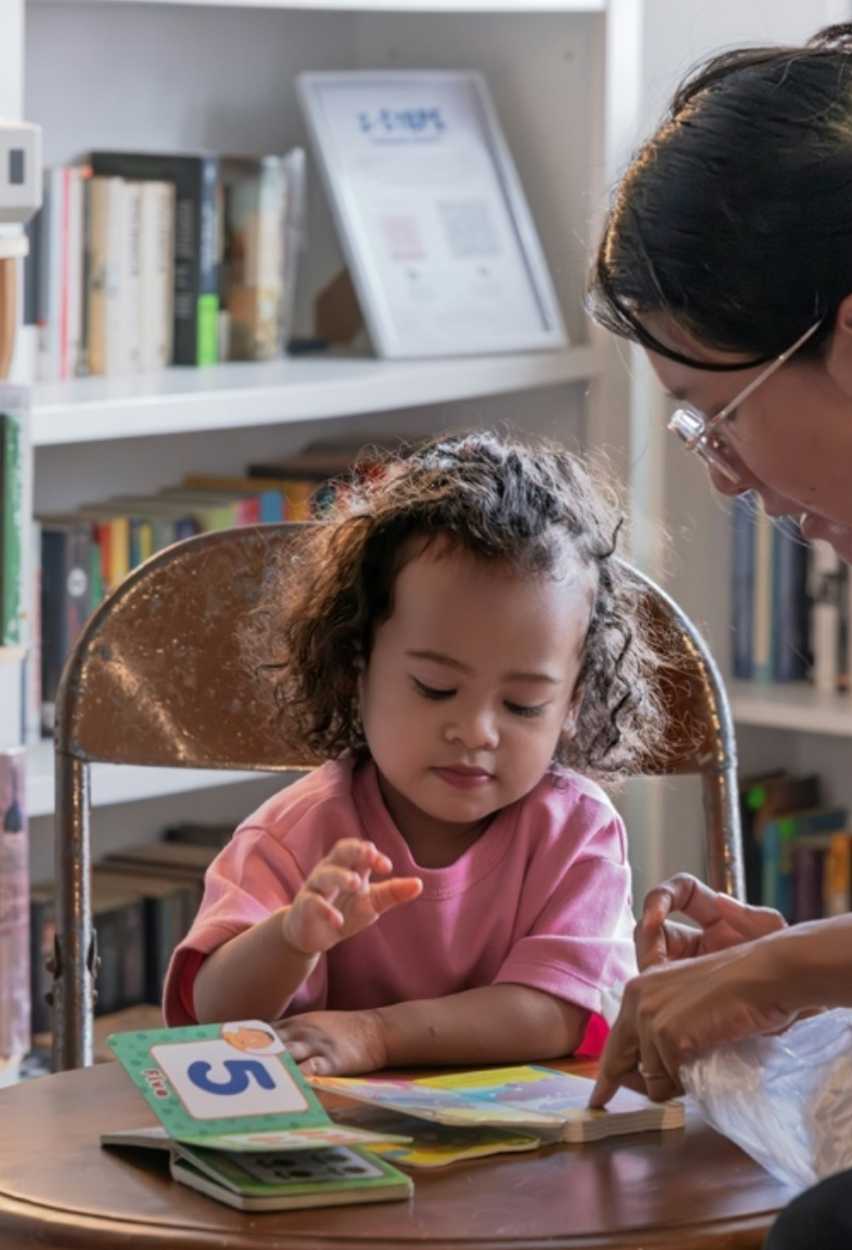
An assessment with an SLP isn't a test your child can fail. It's more like a very organized observation session, guided by someone who's been trained to notice things you might not know to look for. We look at how your child communicates, not just words, but gestures, eye contact, play, understanding, and social interaction. We look at what's there, not just what's missing.
We also talk to you a lot, because parents are genuinely our best source of information. You see your child every day and that context is irreplaceable. From there, we put together a picture of what's going on and, if support is needed, what kind would actually help. Not a one-size-fits-all plan, but one that fits your kid specifically.
Early support, when it's needed, makes a real difference. At Meridian Rehab, we believe that real, lasting change happens between sessions — not just during them. That's why our approach puts you at the centre of it. We coach parents and caregivers, so you feel confident supporting communication every day, with practical home programs designed to fit into real family life. Because the progress your child makes in the clinic only sticks when it carries over into the moments that matter most.
The bottom line
If your child isn't talking as much as their older sibling did or you have concerns about their communication skills, it doesn't necessarily mean that something is wrong. It also doesn't mean you should wait and wonder in silence. You're allowed to ask. You're allowed to get a second set of eyes (and ears) on the situation. Speech Pathology Australia specifically encourages families not to simply “wait and see” if communication concerns persist.
Have questions or concerns about your child's speech?
An SLP assessment is a great place to start. No referral is needed. Complete our intake form and someone from our team will contact you within 3 business days